Chapter 13
The Voice on the Phone
AI learned to talk — and to talk as you. How voice assistants work, how a few seconds of audio becomes a clone, and the two low-tech defenses every family should set up this week.
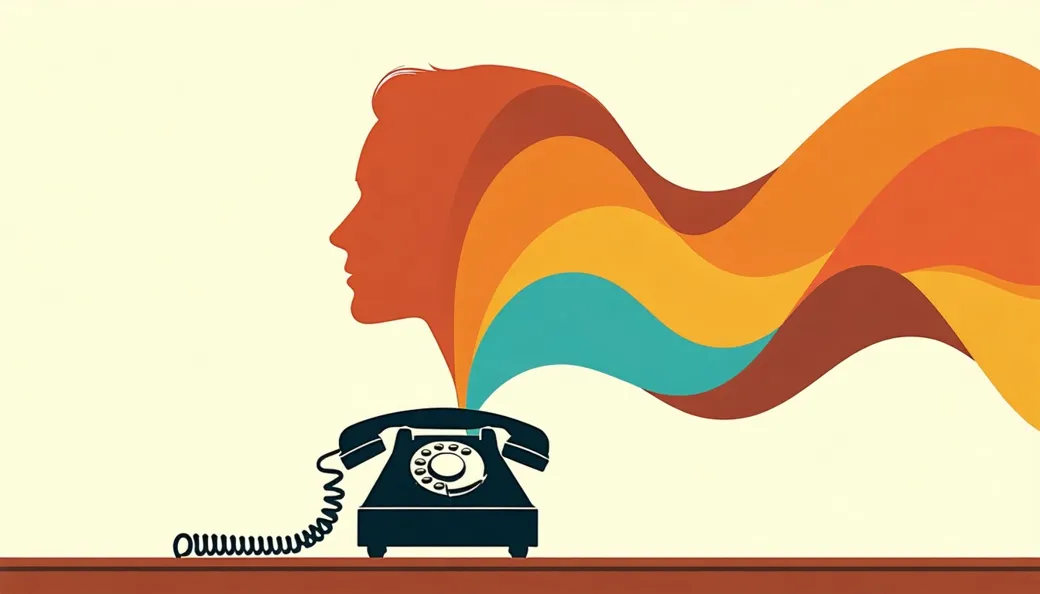
Friday evening, the night before Mom's birthday dinner. Your grandmother's phone rings. It's you — your voice, unmistakably: panicked, a car accident, you're okay but you need $900 for the tow and the deductible tonight, please don't tell Mom, it'll ruin the party, can she buy gift cards and read the numbers over the phone? Except it isn't you. You're at home, wrapping presents. Chapter 10 gave this scam a paragraph in its threat model. It gets a whole chapter now, because voice is the AI risk most likely to reach the people you love — and because the defenses cost nothing and work.
How the box learned to talk
Black box first, as always. From the outside, a voice assistant is a box you talk to that talks back. Inside, the classic design is three boxes in a row — and the middle one is an old friend:
- Ears: speech-to-text. A model trained on huge amounts of recorded speech turns your sound waves into written words. This is Chapter 2's pattern-learning machinery, pointed at audio: sounds in, tokens out.
- Brain: the LLM. Your transcribed words land in a context window, and the token loop from Chapter 4 predicts a reply — exactly as if you'd typed. Everything you know about hallucination, context, and wording applies unchanged. The voice doesn't make it wiser; it makes it sound wiser.
- Mouth: text-to-speech. A third model turns the reply's tokens back into a waveform — pitch, pacing, breaths and all. Modern versions don't stitch together prerecorded syllables; they generate the audio, the way an LLM generates text, one small slice of sound at a time.
Newer systems collapse the three boxes into one "native audio" model that works on sound-tokens directly — that's why the latest voice modes can laugh, whisper, and be interrupted mid-sentence. But the three-box picture remains the right mental model, and it hands you the key insight of this chapter: step 3 is a generator. A machine that can generate a voice can be steered to generate a particular voice. Give it samples of one person's speech, and the same pattern-completion that writes essays in Hemingway's style speaks sentences in your sister's.
Three seconds
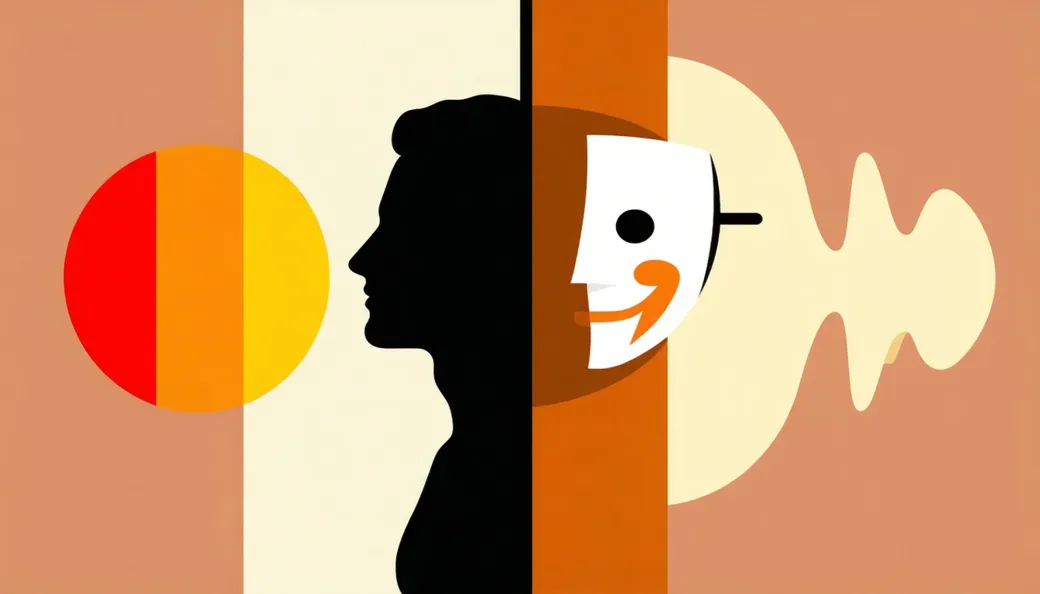
How much of someone's voice does the steering take? In January 2023, Microsoft researchers published a system called VALL-E that could, in their words, "synthesize high-quality personalized speech with only a 3-second enrolled recording of an unseen speaker" — and it preserved the speaker's emotion and even the acoustic feel of the room from that snippet. Three seconds. That was the research frontier back in 2023; easy-to-use commercial tools followed, and cloning a voice went from PhD project to product feature.
Now do the inventory you've never done: how many seconds of your voice are public? A toast at a wedding someone posted. Your outgoing voicemail greeting. A school concert on a relative's feed. A work webinar. For most people the answer is minutes, not seconds — enough, many times over. The U.S. Federal Trade Commission put it plainly in its consumer alert on these scams: all a scammer needs is "a short audio clip of your family member's voice — which he could get from content posted online."
Anatomy of the call
The fake family emergency scam is decades old — it worked by static, sobbing, and "Grandma, it's me." What the clone changes is precisely one thing: the voice used to be the weak point of the con, and now it's the strong point. The script is worth knowing cold, because the script is the tell:
- A crisis, out of the blue. An accident, an arrest, a mugging far from home. The details are vague; the panic is vivid.
- Urgency. Money is needed in the next hour, not tomorrow. Speed is the whole game: the scam dies the moment you slow down and check.
- Secrecy. "Please don't tell Mom/Dad" — dressed up as embarrassment, but really there to stop the one phone call that would unravel everything.
- Untraceable payment. The FTC's list: wire transfers, cryptocurrency, or gift cards ("give them the card numbers and PINs"). Ordinary emergencies are never payable only in gift cards. This step alone identifies the scam with near-certainty.
Notice what's not on the list: anything technical. You will not defeat this scam by listening harder for robotic artifacts — clones are past that, and a "bad connection" covers whatever roughness remains. The defense has to move off the audio channel entirely.
The two-gate defense
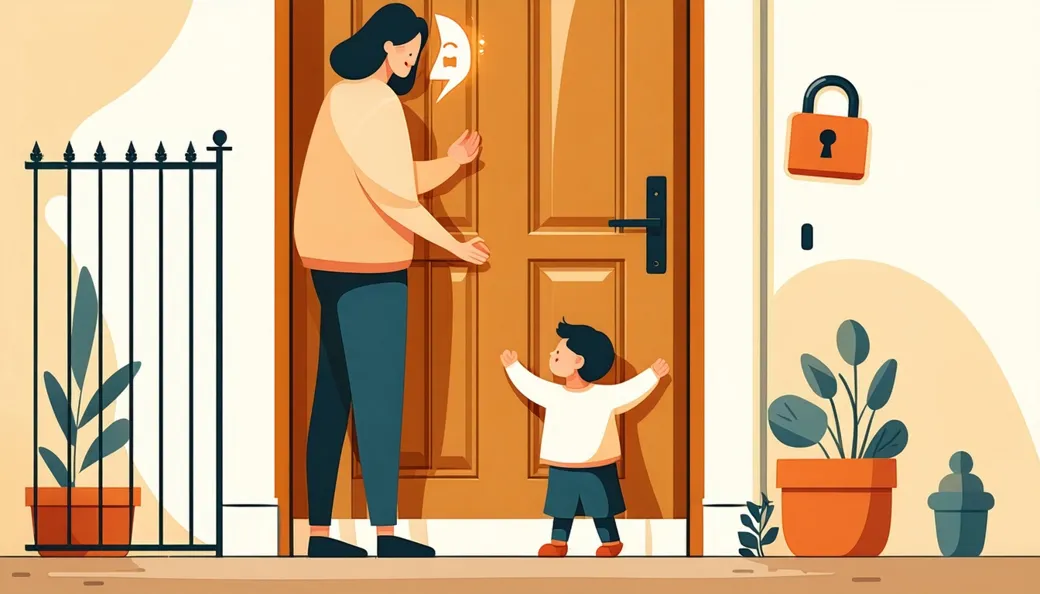
Gate one comes straight from the FTC's playbook; gate two is the FBI's standing advice — and this book already gave you both in Chapter 10:
- Hang up and call back — on the number you already have. Not the number that just called; the one in your contacts. The FTC's phrasing: don't trust the voice; contact the person using "a phone number you know is theirs," and if you can't reach them, check with other family members or friends. This single habit beats the scam no matter how perfect the clone is — because the scammer controls the incoming call, not the one you place to a number you already have.
- Agree on a family code word. A word or phrase that would never appear in any video of you — settled in person, told to the people who might get the call. The FBI's public alert on AI-enabled fraud recommends exactly this: "Create a secret word or phrase with your family to verify their identity." A voice-cloner reproduces how you sound, not what you secretly agreed. If a panicked "you" can't produce the word, the call is over. (Do it at Mom's birthday dinner — you'll have everyone at one table.)
And teach the pattern behind both: urgency + secrecy + untraceable payment = scam, with or without AI. The cloned voice removes only one tripwire — "it didn't sound like her." The other tells are all still there, which is why a family that knows the script is safer than a family that trusts its ears.
What the law says
The legal system moved unusually fast on this one. In February 2024 the U.S. Federal Communications Commission issued a unanimous ruling that calls made with AI-generated voices count as "artificial" under the Telephone Consumer Protection Act — the existing anti-robocall law — making voice-cloning technology in common robocall scams illegal, effective immediately, and giving state attorneys general expanded tools to prosecute. "We're putting the fraudsters behind these robocalls on notice," said Jessica Rosenworcel, the FCC's chair at the time. Worth knowing, and worth exactly this much comfort: the law punishes callers after the fact; it doesn't screen your grandmother's incoming calls. The gates above still do the protecting.
The other side of the ledger
Voice AI is not a villain technology with a scam attached — mostly it's the opposite. The same generation machinery reads the web aloud to people who can't see it, gives a synthetic voice to people who lost theirs to illness (some banked recordings of their own speech while they could still make them), translates a conversation in something close to real time, and lets you ask for the dinner reservation's confirmation number while both hands are in the cake batter. The ledger looks like every chapter of this book: a general capability, indifferent to intent. You now understand the mechanism well enough to enjoy the good column and gate the bad one.
Misconception: "I'd know my own family's voice anywhere"
You would — and that's precisely the vulnerability, not the protection. Your ear's "that's really her" feeling evolved against a world where producing someone's voice required their throat. That world ended. A clone built from a few seconds of public audio, played through a phone's narrow, compressed channel, in a moment of engineered panic, clears the bar your ear sets — the FTC's alert exists because it kept happening to people who were sure they'd know. The modern rule is blunt: on an incoming call, a voice is not identity. Identity is a callback to a known number, or a code word. Nothing else on the call counts.
Simplified!
"Three seconds and your voice is stolen" compresses a messier truth. VALL-E's 3-second figure is a research result under lab conditions; convincing clones in the wild typically use more audio, and quality varies with the sample, the tool, and the target sentence. Also, our three-box pipeline is the classic design — modern voice modes increasingly run one model on audio directly, which is why they handle interruptions and tone so naturally. Neither simplification changes the advice: the audio-you-need number only falls over time, and the defenses never depended on it anyway.
Try it now (at the dinner table, 10 minutes)
This chapter's exercise happens away from the keyboard. At your next family gathering — say, a certain birthday dinner — do three things. (1) Pick a code word together; make it silly enough to remember and private enough to never appear online. (2) Rehearse the callback rule out loud, especially with the oldest and youngest people at the table: any urgent money call, no matter whose voice — hang up, call back on the number you have. (3) Do the sixty-second audio inventory as a group: who has public videos, voicemail greetings, posted toasts? Nobody has to delete anything — the point is for everyone to update the same belief at the same table: the voice on the phone is no longer proof of the person on the phone.
Where to go deeper
- Easy: The FTC's consumer alert, "Scammers use AI to enhance their family emergency schemes" — one page, plain language, the source of this chapter's script and defenses. Send it to a relative today.
- Medium: The FCC's ruling making AI-voice robocalls illegal (February 2024) — a short official release that shows how existing law was stretched to cover cloned voices, and what enforcement can and can't do for you.
- Deep: The VALL-E paper (Microsoft Research, 2023) — the "3 seconds" result. Skim the abstract and demo descriptions to see how voice cloning is literally the language-model recipe from Chapter 4, run on sound.